Did we really need to get chickenpox?
I don’t remember when I had chickenpox, but I do know two things: I had it, and I had it when I was very young. The conventional wisdom I recall is that their children should get chickenpox when they are very young, as it will be far milder than getting it when they get older, and they will have lifetime immunity against it. I don’t remember the “chickenpox parties” that millennials my age sometimes talk about, when parents would have one young child with chickenpox associate and infect several other young children. I do have a memory of my sister getting chickenpox, then me getting chickenpox, and then never having to think about it again. This may be a moot point now, as there has been a chickenpox vaccine for thirty years. But at some points, for my parents in the 1980s, getting chickenpox was an experience that would be far easier younger than older. They sought out short-term pain for a long-term benefit, and I haven’t had to think about it since. There’s a chance I could develop shingles later in my life, but other than that, getting the disease young has potentially saved me from more pain.
This might be a more extreme example, but it is a well-documented example of how experiencing something early is better than putting it off and facing its consequences later. This can happen often with learning: we learn languages better when we learn them at a young age, we can better learn musical instruments at a young age, and we can recover from brain injuries like a stroke more rapidly at a young age. Going back to my previous blog post, it is a lot easier to learn how to ride a bike when a young child rather than as an adult. There are biological and societal reasons for all of this; chief among them is that young children might not be as aware or care as much if they are likely making a mistake, allowing them to learn from experience rather than worrying if they are right or wrong. But I would venture the main reason is a term that is often thrown around but not always defined: neuroplasticity.

This is probably a nicer image than actual chickenpox
Eight years ago, Jonathan Haidt (and his co-author, Greg Lukianoff) wrote The Coddling of the American Mind. This examined a shift on college campuses where students were increasingly uncomfortable with ideas different from their own. Part of their argument is that those students, the first termed by Jean Twenge as iGen (or more commonly today, Gen Z), had lives that were heavily planned out by parents and authority figures, and these students were less likely to have needed to solve emotionally uncomfortable situations on their own because the authority figures in their lives were more likely to step in, advise, or solve them for them.
Haidt focuses on this question more fully in his book The Anxious Generation, which notes that the loss of unsupervised play and freedom has changed young minds. Children learn to resolve conflicts and deal with failure on their own. As the brain ages into adolescence, the prefrontal cortex (which handles our critical reasoning and executive functioning) develops as well; when young people use their brains in ways of social friction, they develop their prefrontal cortices. Yet our young people are losing opportunities for risk-taking in lives that are more highly controlled, and the advent of phones and digital devices has made this more profound. Thus, young people have less experience in resolving social friction and are more likely to experience anxiety because they have not developed the coping mechanisms throughout their earlier life.
Neuroplasticity is the brain’s ability to strengthen itself based on a number of stimuli and experiences. When someone repeatedly performs a task and practices a skill, the neural pathways needed to complete that skill strengthen, making it easier for the brain and the person to complete that skill. A thought process becomes automatic (like procedural memory). Yet this does involve the physical rewiring of the brain, and brain cells grow and establish new bridges across cells. Without neuroplasticity, we (and our brains) would be far less likely to acquire new skills and learn how to operate in new environments. Our brain is like a muscle, and we can develop it just like every other muscle in our body. Consider a forest without any pathways or trails. The first time we try to walk through that forest, it’s really challenging! But after we establish trails, moving is much easier. Our brains are similar! If we let our brain be a dense forest, it will never truly develop. But if we connect different neurons with new paths, ideas can move around much more easily.
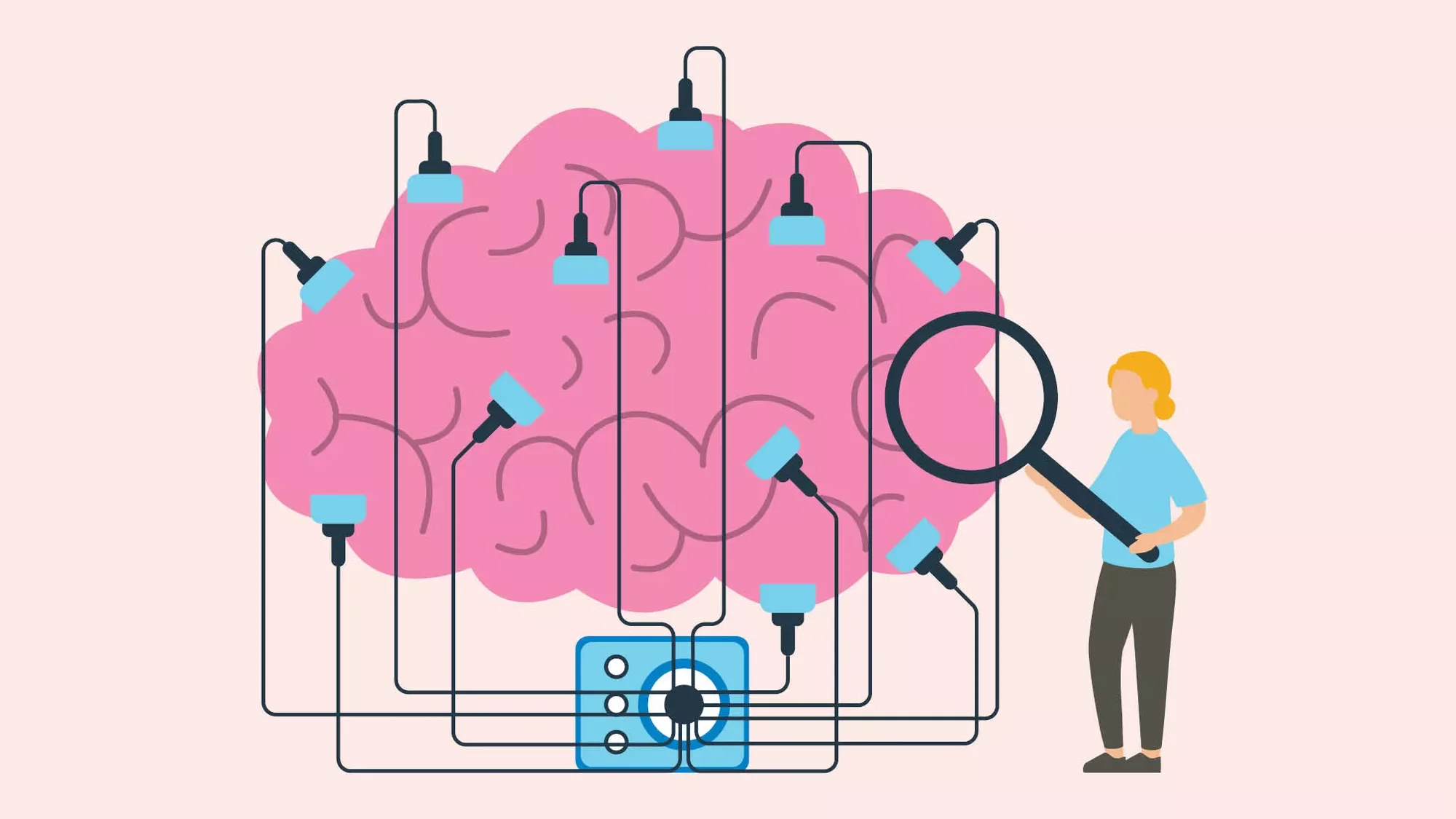
Neuroplasticity, per the Cleveland Clinic
Since The Anxious Generation came out in 2024 (and was likely written in the years before it), AI has exploded in its capabilities and usage. He and his writing team in their Substack newsletter After Babel noted that AI chatbots offer a substitute for human relationships that warps how the human mind works. Real human relationships, like the successful relationships I have with my wife, family, friends, and colleagues, require boundary-setting and compromise. LLMs and AI chatbots offer unlimited patience and a laser-like focus on the user. They offer complete self-validation at a time in life when young people so desperately want it, and this will only increase the anxiety that is already present in young people.
The solution, as I see it, is not to eliminate the use of LLMs and AI for young people in their lives, because I don’t think that is practical or particularly helpful. If a tool exists, people are going to find a way to use it; imagining it doesn’t exist or trying to prevent its usage will likely fail. Additionally, AI tools give the user instant feedback, and that instant feedback can be so useful to someone who wants to learn. Going back to the forest analogy: if I am stuck in a forest, I need to find my way out of it. If an AI tool can help me find my way, that’s great! If I rely on AI all the time, I’m no longer thinking. If I ask an AI tool to build paths and then never learn why they're built that way, I have learned nothing and never will. Young people and adolescents are at a time in their lives when they have to learn so much. The key is to prevent AI from doing the easy work for them, and to encourage them to think! One concept I am considering is creating an AI agency framework that educators and those responsible for students can use to highlight and promote this cognitive friction in students' lives so they can reflect on how they have maintained their ability to think for themselves and for their brains to develop. At the heart of this work is how we frame optimal use of technology with young people; I don’t think we can eliminate the potential of people using AI to outsource our learning entirely, but I do think we can do a lot.
So what does this look like in practice in the real world? Imagine a thirteen-year-old student struggling with a rapidly changing understanding of the world around them, who is struggling with friendships changing and more challenging schoolwork and likely discomfort about their place in the world. Rather than cognitive offloading, we should encourage the AI to push that student to have better ideas and to give instant feedback. This can work in an academic sense (instead of asking an LLM to solve a geometry problem, provide three problems on this concept of varying difficulties and tell them what they got right and wrong). But this can be transformational in developing a student’s social and emotional well-being if done right. Instead of using the AI tool to validate, one thing we can encourage our young people to do is have emerging AI tools explain what they as learners do not understand. Rather than get validation from an AI tool that they are right in an argument with a peer or a friend, have the tool build that person’s capacity for understanding and solving the issue: understand why their friend acted that way in the first place, walk through potential tricky talking points, and give that young person the chance to exercise their mind and think through how to solve that particular thorny situation.
Even if that means deciding which of our old toys to keep
My parents, and many other parents of millennials, knew that getting chickenpox at a young age would prevent us from significant pain in our future years. We have the opportunity to do something similar for our young people today in the world of emerging AI. Getting chickenpox at a young age helped my body learn how to fight it, and helped my immune system develop further. Our brains are no different, and we need our AI use to help us build those pathways ourselves. Otherwise, we’ll be lost in the woods forever.
